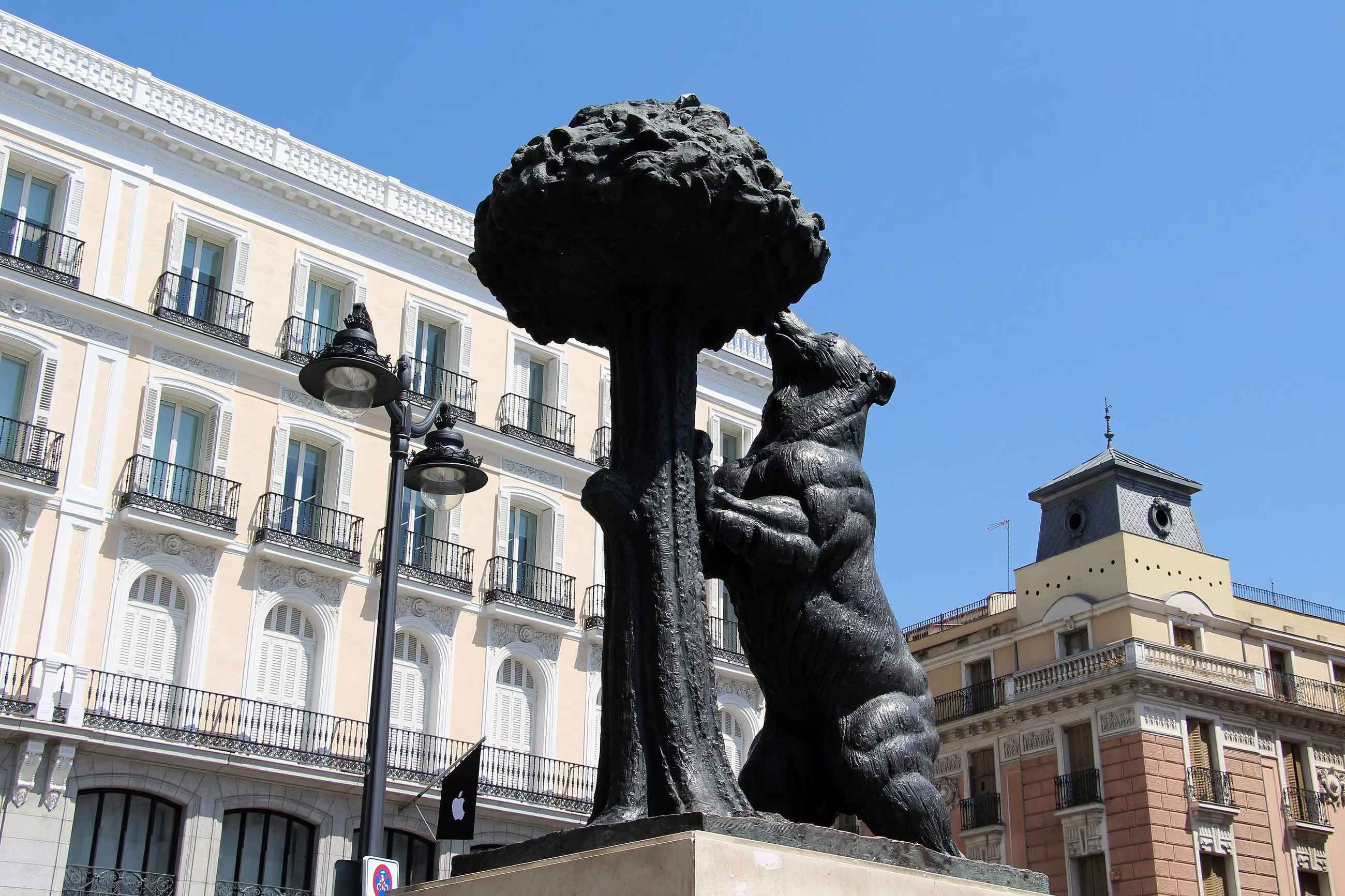
El Oso y el Madroño — the Bear and the Strawberry Tree — is one of Madrid’s most recognizable symbols, but the sculpture in the Puerta del Sol is fairly recent. It was installed in 1967 and has changed location several times since.
The figure represents the city’s coat of arms: a bear leaning against a tree, accompanied by seven stars. Its origin dates back to the Middle Ages and is tied to a dispute between the City Council and the Church over the use of the lands surrounding Madrid.
The bear of Madrid
The bear has appeared in Madrid’s emblems since the 13th century. In the oldest depictions it walked on four legs and was accompanied by seven stars, traditionally linked to the constellation of Ursa Major.
In 1222, the Council of Madrid and the ecclesiastical Chapter reached an agreement to divide the use of the lands near the town. The Church kept the pastures, while the Council obtained the trees, the game and the woodlands.
From then on, the bear began to be depicted upright and leaning against a tree. The image served as a reminder of the forest resources that had come under municipal control.
The tree was not always clearly identified as a strawberry tree. That interpretation took hold over time, even though the strawberry tree was not necessarily the most abundant species around Madrid. The power of the symbol ultimately mattered more than its botanical accuracy.
The sculpture
The work was created by Antonio Navarro Santafé, a sculptor who specialized in depicting animals. Cast in bronze, it stands roughly four meters tall and weighs some twenty tonnes.
It was installed on January 10, 1967 in the space between Calle de Alcalá and the Carrera de San Jerónimo. The official inauguration was held nine days later.
The sculpture did not try to reproduce the coat of arms literally. Navarro Santafé created a figure with volume and movement, designed to be viewed from different angles. The bear leans against the trunk while raising its muzzle toward the branches.
Within a few years it became a favorite meeting spot. Saying “see you at the Bear and the Strawberry Tree” was easier than agreeing on an exact address within the square.
Its changes of location
In 1986, during a remodeling of Sol, the sculpture was moved to the entrance of Calle del Carmen. It remained there for more than twenty years, surrounded by traffic and by the people coming and going along one of the city’s main shopping streets.
In 2009 it returned to the eastern end of the square, near its original position. The latest remodeling moved it once more, in March 2023. Since then it has stood beside the line of benches along the northern arc, near Calle de Alcalá.
These relocations show how the layout of Sol has changed. The sculpture went from occupying an area ringed by cars to being part of a fully pedestrian square.
A recent symbol with an ancient history
The Bear and the Strawberry Tree is not the oldest monument in Sol. The Casa de Correos, the Losada clock and the Kilometre Zero plaque all came first.
Yet it has become one of the images most often used to represent Madrid. It appears in logos, souvenirs, publications and institutional campaigns. Most visitors seek out the sculpture before they even know the story of the coat of arms.
The work is little more than half a century old. The image it represents has accompanied Madrid for roughly eight hundred years.
Frequently asked questions
What does the Bear and the Strawberry Tree symbolize?
Where is the statue of the Bear and the Strawberry Tree?
When was the sculpture installed?
Sources
Keep exploring
History of the Puerta del Sol
From medieval gate to the symbolic centre of Madrid: the history of the Puerta del Sol, its great 19th-century renovation, the arrival of transport, its monuments and its role as a gathering place.
LeerThe great renovation that created the Puerta del Sol
The 1857-1862 renovation that created today's Puerta del Sol: the competing designs, the demolitions, Lucio del Valle's arc of buildings and the cost of the new square.
LeerKilometre Zero
The Kilometre Zero plaque, in front of the Real Casa de Correos in the Puerta del Sol, marks the historic origin of Spain's six radial highways. Its history since 1856 and today's compass rose.
LeerWhy It Is Called Puerta del Sol
Puerta del Sol was once a gateway into medieval Madrid, decorated with a sun. Discover how that vanished gate gave the square its name.
Leer