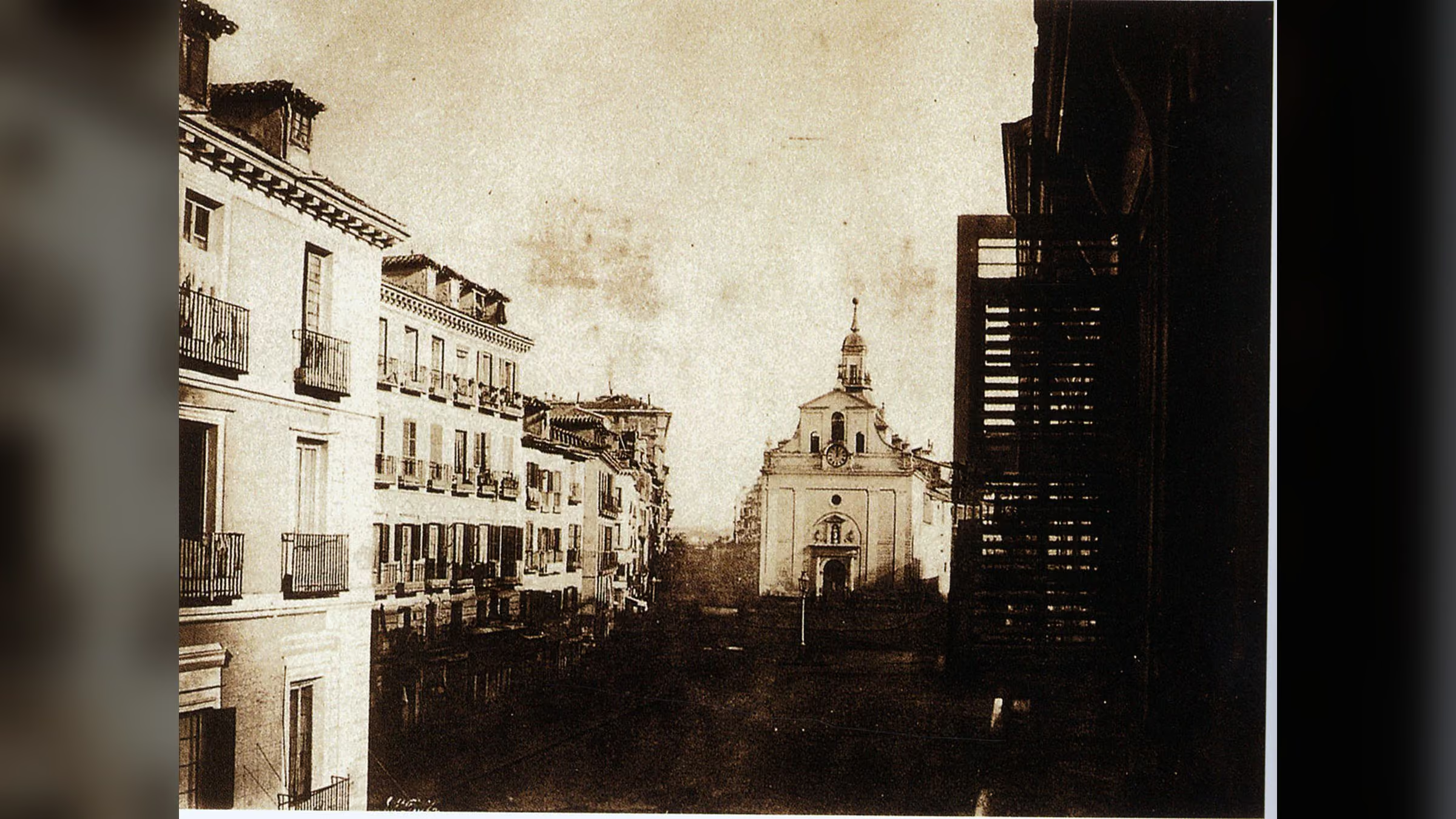
Before the Hotel de París and the Apple Store, the corner between Calle de Alcalá and the Carrera de San Jerónimo was occupied by a church and a hospital.
The Buen Suceso stood in Puerta del Sol for more than three hundred years. In front of it was the fountain of the Mariblanca, and on its façade ran the clock that, after the building’s demolition, was moved to the Casa de Correos.
The building disappeared in 1854, but part of its walls resurfaced during construction of the Cercanías commuter rail station.
The Hospital of the Court
The institution’s origins are linked to a small hermitage dedicated to Saint Andrew and to a hospital that cared for the sick and for travelers. In 1529, Charles V authorized the establishment of the Hospital Real de la Corte on the site.
The institution served officials, soldiers, servants and others attached to the king’s service. Hospital and church formed a single complex, enlarged and remodeled on numerous occasions.
During the reign of Philip II it was decided to rebuild the church. Work later continued under the direction of Francisco de Mora, and the building was completed at the beginning of the 17th century.
The plot was irregular, forcing the builders to adapt the structure to the space between Sol, Alcalá and the Carrera de San Jerónimo.
Our Lady of the Buen Suceso
The name came from an image of the Virgin associated with the hospitaller order of Bernardino de Obregón. According to tradition, two friars found the figure during a journey to Rome. Pope Paul V blessed it and declared that its discovery had been a buen suceso — a happy event.
The image was brought to Madrid and placed on the church’s altar. Over time, the name came to identify the entire complex.
In 1630, the fountain crowned by the Mariblanca was built in front of the church. Church, hospital and fountain together defined the image of Sol’s eastern end for two centuries.
The façade also held a public clock. In 1848 a new gas-lit mechanism was installed, though its constant breakdowns drew complaints and jokes from Madrileños.
The 2nd of May 1808
During the uprising of the 2nd of May, fighting spread through Puerta del Sol. Many people sought refuge inside the church while French troops charged and opened fire in the square.
After the occupation, the complex was looted and used as barracks and as a military hospital. The image of the Virgin had to be moved for safekeeping and returned after the French withdrawal.
The building survived, but it continued to suffer structural problems and underwent numerous repairs. By the mid-19th century, its chief difficulty was no longer merely its state of preservation.
The church occupied space that Madrid needed to enlarge Sol and widen the entrances to Alcalá and the Carrera de San Jerónimo.
The Demolition
Demolition began on 24 February 1854. The clock was moved to the Casa de Correos and was eventually replaced in 1866 by the Losada clock.
The Buen Suceso institution later relocated to the Argüelles district, where a new church and a new hospital were built. On the vacant site in Sol, the Hotel de París opened in 1864.
For more than a century it was believed that the old complex had almost entirely disappeared. However, the excavations carried out to build the Cercanías station uncovered walls, buttresses and remnants of its foundations.
A section was dismantled and moved a few meters to make the station possible. Today it can be seen protected behind glass inside the concourse.
The Buen Suceso no longer occupies the surface of Sol. It remains below, alongside the travelers who pass in and out of the station every day.
Frequently asked questions
What was the Buen Suceso in Puerta del Sol?
When was the church of the Buen Suceso demolished?
Does anything survive of the Buen Suceso?
How is the Buen Suceso connected to the Puerta del Sol clock?
Sources
Keep exploring
History of the Puerta del Sol
From medieval gate to the symbolic centre of Madrid: the history of the Puerta del Sol, its great 19th-century renovation, the arrival of transport, its monuments and its role as a gathering place.
LeerThe great renovation that created the Puerta del Sol
The 1857-1862 renovation that created today's Puerta del Sol: the competing designs, the demolitions, Lucio del Valle's arc of buildings and the cost of the new square.
LeerKilometre Zero
The Kilometre Zero plaque, in front of the Real Casa de Correos in the Puerta del Sol, marks the historic origin of Spain's six radial highways. Its history since 1856 and today's compass rose.
LeerWhy It Is Called Puerta del Sol
Puerta del Sol was once a gateway into medieval Madrid, decorated with a sun. Discover how that vanished gate gave the square its name.
Leer