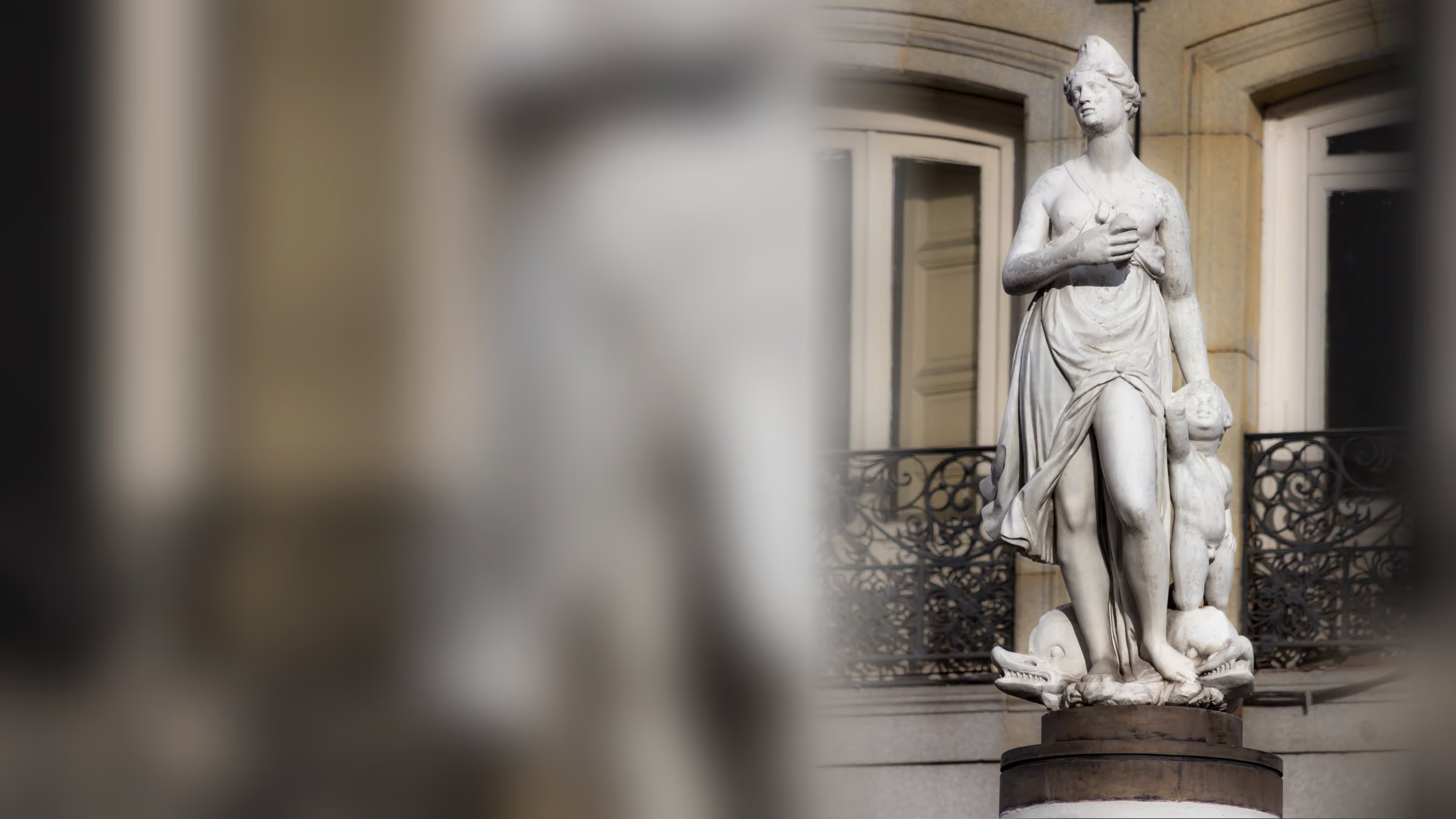
La Mariblanca arrived in Puerta del Sol more than three centuries before the Bear and the Strawberry Tree. The current statue is a replica, but it reproduces the marble figure that, from 1630 onwards, crowned one of the most important fountains of Habsburg Madrid.
Its name was never official. Madrileños began calling it Mariblanca because of the color of the stone, and ended up turning it into one of the square’s first popular symbols.
The Fountain of the Harpies
At the beginning of the 17th century, Madrid needed to improve its water supply and beautify the city’s main public spaces. In 1616 it was decided to build a grand fountain in front of the church of the Buen Suceso, at the eastern end of Sol.
The final design was the work of the Italian sculptor Rutilio Gaci, and the ensemble was completed in 1630. It featured a basin, marbles of different colors, sculpted masks and four harpy figures from which the water flowed. That is why it became known as the Fountain of the Harpies.
At the top stood a marble statue purchased in Florence in 1625. It most likely represented Venus, accompanied by a small Cupid and elements associated with the sea.
Madrileños never used that classical name. They called her Mariblanca.
A Popular Figure
The fountain was used daily by neighbors and water carriers. Water arrived through the underground channels known as viajes de agua and was collected in pitchers to be carried back to people’s homes.
Constant use caused damage and made several repairs necessary. In the 18th century, Pedro de Ribera altered much of the ensemble, removing the harpies and simplifying some of its elements. The statue remained on top.
La Mariblanca presided over Sol for more than two hundred years. She watched over a narrow square, crowded with carriages and surrounded by buildings that would disappear during the great 19th-century renovation.
In 1838 the fountain was dismantled because it took up too much space and had fallen into disrepair. The structure vanished, but the statue was preserved.
The Journeys
La Mariblanca was taken to the Plaza de las Descalzas, where she was once again placed atop a fountain. In 1892 she was removed to make way for another monument and spent years passing through municipal warehouses, the Retiro park and various city facilities.
In 1969 she was installed on a fountain along the Paseo de Recoletos. There she suffered several acts of vandalism and was seriously damaged in 1984. After restoring her, the City Council decided to protect the original piece inside the Casa de la Villa.
The authentic statue was never displayed outdoors again.
The Return to Sol
A limestone replica was made from a mould of the original. It was installed in Puerta del Sol in 1986, close to where the old fountain had once stood.
The Cercanías commuter rail works forced its removal and, in 2009, it returned to a spot beside Calle del Arenal. The renovation completed in 2023 moved it once more, a few meters away, to the western end of the line of benches along the northern arc.
The figure we see today does not occupy the exact position of the original fountain, nor does it retain its function. It no longer provides water or forms part of a grand ornamental ensemble.
Its presence serves as a reminder of the Puerta del Sol that existed before the Casa de Correos, the clock and the 19th-century renovation. Before becoming the center of Spain’s highways and of the New Year’s Eve chimes, Sol was also the place where Madrileños came to fetch water.
Frequently asked questions
Where is La Mariblanca?
Is the Mariblanca in Puerta del Sol the original?
Who does La Mariblanca represent?
Why is it called Mariblanca?
Sources
Keep exploring
History of the Puerta del Sol
From medieval gate to the symbolic centre of Madrid: the history of the Puerta del Sol, its great 19th-century renovation, the arrival of transport, its monuments and its role as a gathering place.
LeerThe great renovation that created the Puerta del Sol
The 1857-1862 renovation that created today's Puerta del Sol: the competing designs, the demolitions, Lucio del Valle's arc of buildings and the cost of the new square.
LeerKilometre Zero
The Kilometre Zero plaque, in front of the Real Casa de Correos in the Puerta del Sol, marks the historic origin of Spain's six radial highways. Its history since 1856 and today's compass rose.
LeerWhy It Is Called Puerta del Sol
Puerta del Sol was once a gateway into medieval Madrid, decorated with a sun. Discover how that vanished gate gave the square its name.
Leer