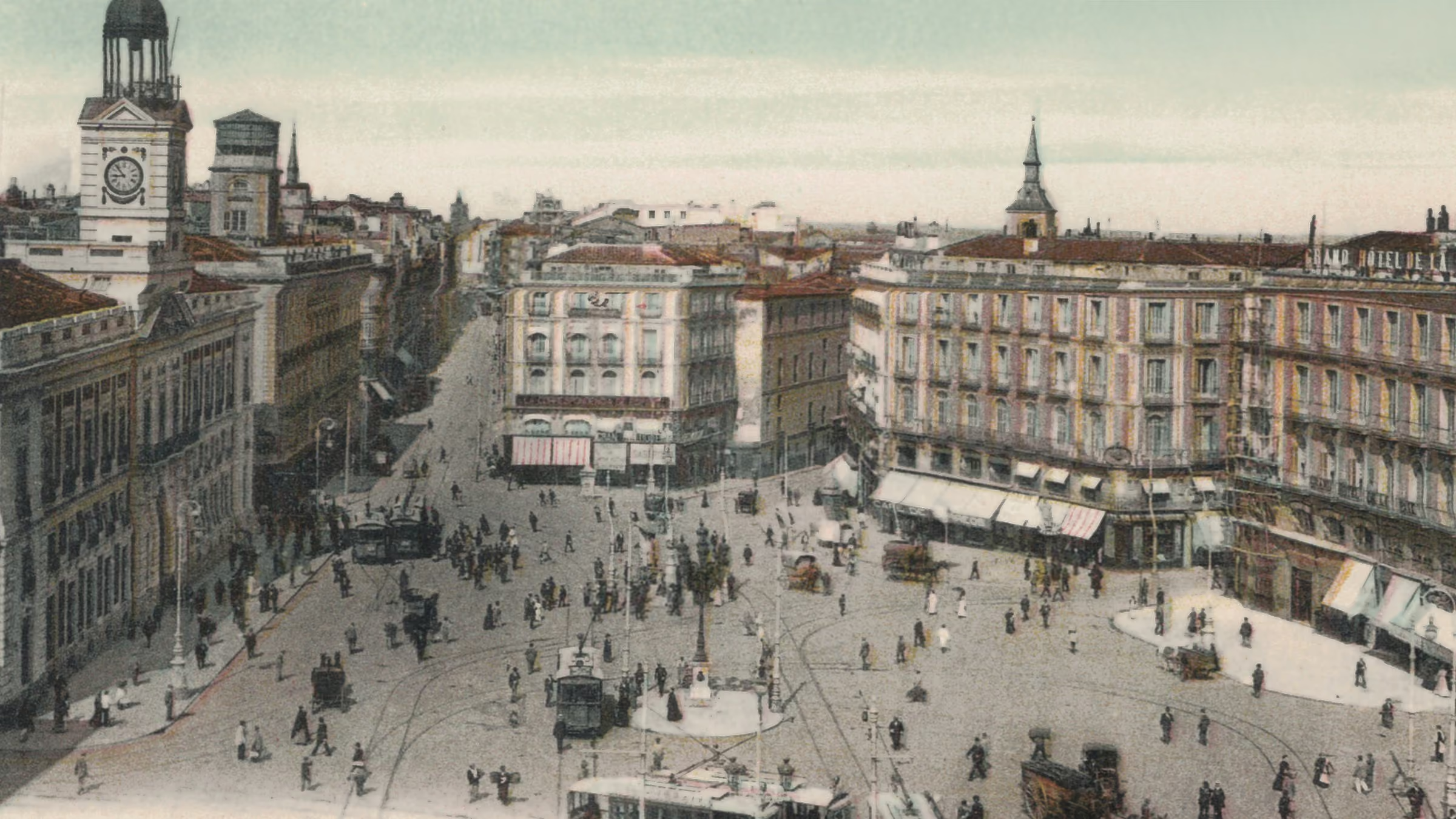
Before the Metro, the buses or Cercanías existed, Puerta del Sol was already Madrid’s principal crossroads. Its streets carried carriages, hired coaches, horses and travelers entering or leaving the city.
Every new mode of transport eventually made its way to Sol. First came the stagecoaches and omnibuses; then the trams, the automobiles, the Metro and the trains.
Today the square is pedestrian, but beneath it one of Madrid’s most important stations is still at work.
Stagecoaches and Hired Carriages
Traveling before the railway was slow and unpredictable. Roads could turn to mud, animals needed rest, and journeys were made in stages.
Stagecoaches carried passengers between Madrid and other cities. At the post houses, horses were changed and travelers could eat or spend the night. Missing a departure could mean waiting one or several days.
Sol had no single station. The offices, inns and coach houses on the surrounding streets sold tickets and organized departures. Passengers waited in cafés and lodgings while the luggage was loaded onto the vehicles.
Within Madrid, people used coches de punto, the forerunners of taxis. They waited for customers at designated stands and made it possible to travel to the Royal Palace, the Prado, the theaters or the railway stations.
Railway and Hotels
The opening of the line between Madrid and Aranjuez in 1851 marked the beginning of the railway’s expansion. The stations lay outside the center, so travelers still needed a carriage to reach Sol.
The hotels sent vehicles to collect their clients. Drivers waited at the stations holding the establishment’s name and carried guests and their trunks to the square.
The Fonda de los Príncipes and the Hotel de París were born in this context. Sol functioned as the true point of arrival in Madrid, even though the trains ended their journeys at Atocha or the Estación del Norte.
The omnibuses, horse-drawn collective vehicles, also connected the stations with the main hotels and neighborhoods.
Trams Across the Square
Madrid’s first tram began operating in 1871 and passed through Puerta del Sol. The cars ran on rails but were still pulled by mules or horses.
At the end of the 19th century, electric trams came into use. The square filled with tracks, poles and wires. The vehicles entered from several streets, and pedestrians had to cross between trams, carriages and hired coaches.
The new technology could carry more people, but it once again clogged the space that the 19th-century renovation had tried to clear.
The first automobiles appeared shortly afterwards. For several years, horses, electric trams, bicycles, taxis and pedestrians all shared Sol.
The Metro
On 17 October 1919, the first line of the Madrid Metro was inaugurated, running between Sol and Cuatro Caminos. It had eight stations and was roughly four kilometers long.
The Sol entrance was marked by a pavilion designed by Antonio Palacios. The structure of stone, iron and glass presented the new transport system as a symbol of modernity.
For the first time it was possible to cross part of Madrid without depending on surface traffic. The network kept expanding, and Sol became a station on lines 1, 2 and 3.
While the tunnels multiplied, the square above remained crowded with trams, buses and automobiles.
Buses and Cercanías
Buses gradually replaced the trams. They could change routes more easily and adapted better to the growth of traffic.
For decades, numerous lines crossed or terminated at Sol. The square was carved up by roadways and bus stops, and pedestrians moved between sidewalks and traffic islands.
In 2004, work began to bring the Cercanías commuter rail to the square. The excavation was complex because beneath Sol there were already three Metro lines, utility conduits and archaeological remains.
The station opened in 2009, connected to Atocha and Chamartín. Above it rose the great glass entrance known as the whale, later replaced during the most recent renovation.
The Pedestrian Square
In August 2020, Sol was closed to traffic. Buses, taxis and cars disappeared from the surface, and the renovation completed in 2023 created a continuous paved surface running from façade to façade.
Transport never left the square. Metro and Cercanías still run beneath it, connecting Sol to points across Madrid and the wider region.
A guest today can step off the train just a few meters from La Fonda de los Príncipes. There is no longer any need for a hotel omnibus or a horse-drawn carriage to move their luggage.
The way we travel has changed completely, but Sol continues to serve the same purpose: it remains one of the principal points of arrival in Madrid.
Frequently asked questions
When was the Madrid Metro inaugurated?
When did the first tram reach Puerta del Sol?
How did people reach Sol before the railway?
When was Puerta del Sol pedestrianized?
Sources
Keep exploring
History of the Puerta del Sol
From medieval gate to the symbolic centre of Madrid: the history of the Puerta del Sol, its great 19th-century renovation, the arrival of transport, its monuments and its role as a gathering place.
LeerThe great renovation that created the Puerta del Sol
The 1857-1862 renovation that created today's Puerta del Sol: the competing designs, the demolitions, Lucio del Valle's arc of buildings and the cost of the new square.
LeerKilometre Zero
The Kilometre Zero plaque, in front of the Real Casa de Correos in the Puerta del Sol, marks the historic origin of Spain's six radial highways. Its history since 1856 and today's compass rose.
LeerWhy It Is Called Puerta del Sol
Puerta del Sol was once a gateway into medieval Madrid, decorated with a sun. Discover how that vanished gate gave the square its name.
Leer