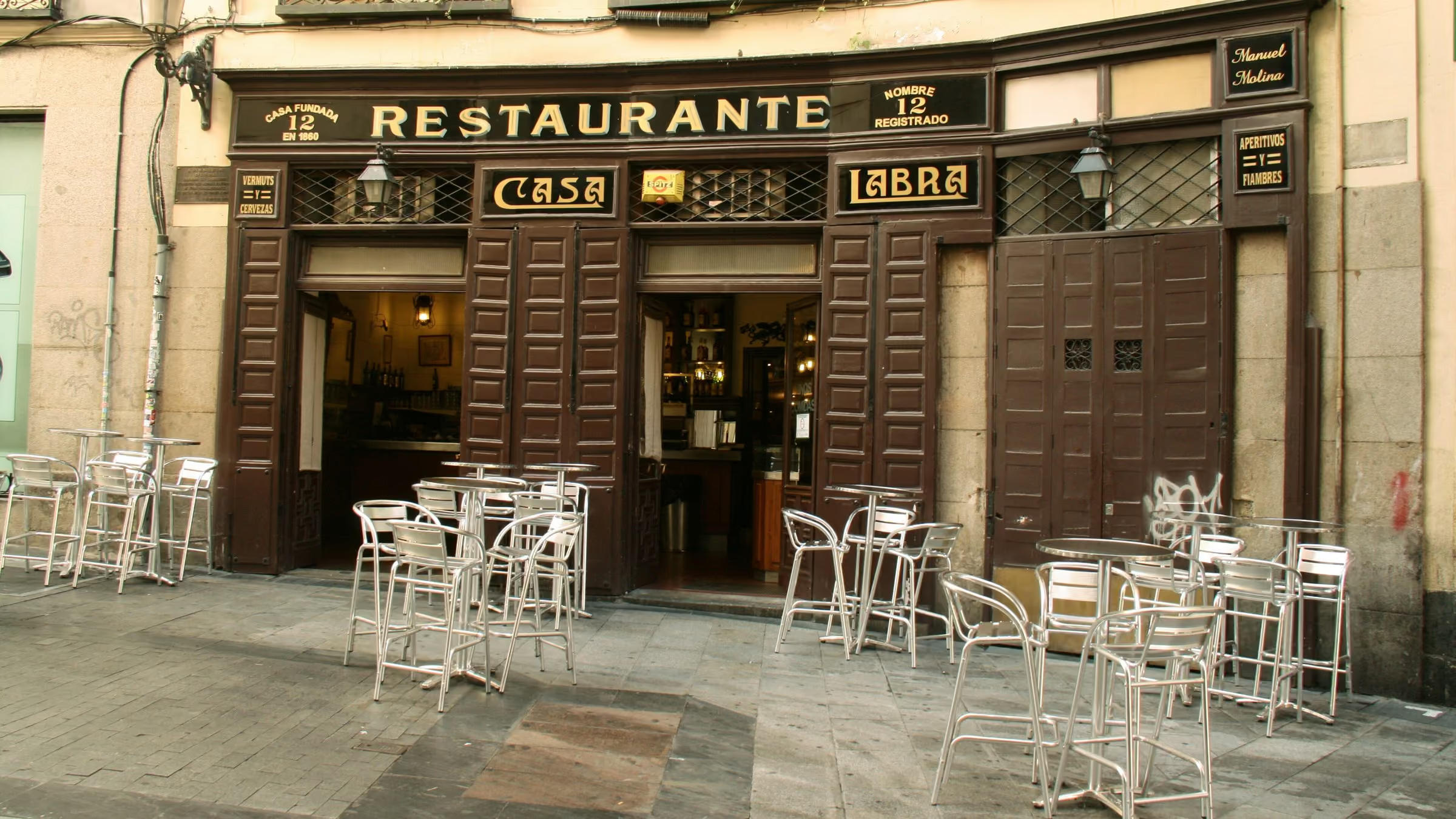
A few steps from the Puerta del Sol, at number 12, calle de Tetuán, stands Casa Labra. The tavern opened in 1860 and is still known for the same things it was generations ago: fried cod, croquettes and wine served at the bar.
Its history is bound up with the everyday life of Sol, but also with one of the best-known political episodes of the 19th century. In one of its rooms, in 1879, was held the meeting that gave rise to the Spanish Socialist Workers’ Party.
Casa Labra has outlived the streetcars, the wars, the arrival of the Metro, the disappearance of the grand cafés and the commercial transformation of the city center. While nearly every historic business on the square changed hands or closed, the tavern kept operating in the very same spot.
A wine house on calle de Tetuán
Casa Labra began as a small wine house founded by an Asturian. Calle de Tetuán was then a narrow, bustling street, tucked between the new Puerta del Sol and the plaza del Carmen. Its surroundings were filled with inns, cafés, shops and lodgings for travelers.
The establishment took its founder’s surname and started out serving wine and simple meals. It was no luxury restaurant, but a place people went to drink, grab a quick bite and chat standing at the bar.
The location could not have been better. Through Sol passed civil servants, merchants, students, journalists, workers and visitors from other cities. Some stopped in before continuing on toward Mayor or Preciados; others came expressly for the cod.
The premises preserve a curved facade adapted to the shape of the building, along with part of its historic decoration. The bar, the tiles, the mirrors and the tables create an atmosphere far removed from the modern establishments that occupy much of the city center.
The cod
For centuries, cod was one of the most widely eaten foods in Madrid. Thanks to salt-curing it could be kept for long periods, and it arrived from the northern ports without any need for refrigeration.
Taverns prepared it in various ways. At Casa Labra, battered and fried cod eventually won out, served in small portions that could be eaten standing up. The croquettes made good use of the flaked fish and became another of the house’s most recognizable offerings.
Also associated with the establishment are the so-called soldaditos de Pavía, strips or portions of battered cod. The name is traditionally linked to the soldiers of General Pavía and the color of their uniforms, though the exact explanation belongs to the legends of Madrid’s gastronomy.
Today’s kitchen includes other traditional dishes, but most visitors still come for the croquettes and the freshly fried cod. Simplicity is part of its identity: a small bite, a drink and a few minutes at the bar.
The meeting of 1879
On May 2, 1879, a small group of typographers, workers and intellectuals met discreetly at Casa Labra. Among them was Pablo Iglesias Posse.
That meeting gave birth to the Spanish Socialist Workers’ Party. The group was tiny and could hardly have imagined the importance the organization would later achieve.
The choice of venue made sense. Taverns offered rooms where one could talk without attracting too much attention. They were also regular meeting places for professional associations, political groups and mutual aid societies.
Casa Labra commemorates that episode with a plaque inside. The establishment’s political history has not erased its everyday character: it remains, above all, a tavern full of people waiting for a croquette or a portion of cod.
A tavern facing a changing square
When Casa Labra opened, the great renovation of the Puerta del Sol was still underway. The Fonda de los Príncipes would not open until the following year, and Losada’s clock would not arrive at the Casa de Correos until 1866.
Since then, calle de Tetuán and its surroundings have changed profoundly. Hotels, guesthouses, cafés and small shops disappeared. The construction of department stores reshaped commercial life, and the arrival of the Metro multiplied the number of people passing through the area.
Casa Labra held its ground on a street that, despite being mere meters from Sol, retains a different scale. The establishment seems hidden among the great facades and the streams of shoppers on Preciados.
That position is part of its appeal. It takes only a few steps off the square to enter a place that still recalls the Madrid of taverns, wine houses and quick meals served over a wooden bar.
Continuity
In 2021, the City Council recognized Madrid’s century-old restaurants and taverns as cultural and tourist spaces of general interest. Casa Labra belongs to that group for its age, its continuity and its connection to the city’s history.
It has not survived by ceasing to operate and becoming a museum. It survives precisely because it remains open.
The croquettes keep frying, customers keep queuing and the tables fill up again every day. That activity allows the place to remain recognizable without being frozen in the past.
Casa Labra is not exactly inside the Puerta del Sol, but it belongs to its history. It was born at the same time as the modern square and has watched nearly all of its transformations from the entrance to calle de Tetuán.
More than 160 years later, it still offers the same reason to step a few paces off the square: a portion of cod and a place within Madrid that hardly needs an introduction.
Frequently asked questions
Where is Casa Labra?
When did Casa Labra open?
Why is Casa Labra famous?
What happened at Casa Labra on May 2, 1879?
Sources
Keep exploring
History of the Puerta del Sol
From medieval gate to the symbolic centre of Madrid: the history of the Puerta del Sol, its great 19th-century renovation, the arrival of transport, its monuments and its role as a gathering place.
LeerThe great renovation that created the Puerta del Sol
The 1857-1862 renovation that created today's Puerta del Sol: the competing designs, the demolitions, Lucio del Valle's arc of buildings and the cost of the new square.
LeerKilometre Zero
The Kilometre Zero plaque, in front of the Real Casa de Correos in the Puerta del Sol, marks the historic origin of Spain's six radial highways. Its history since 1856 and today's compass rose.
LeerWhy It Is Called Puerta del Sol
Puerta del Sol was once a gateway into medieval Madrid, decorated with a sun. Discover how that vanished gate gave the square its name.
Leer