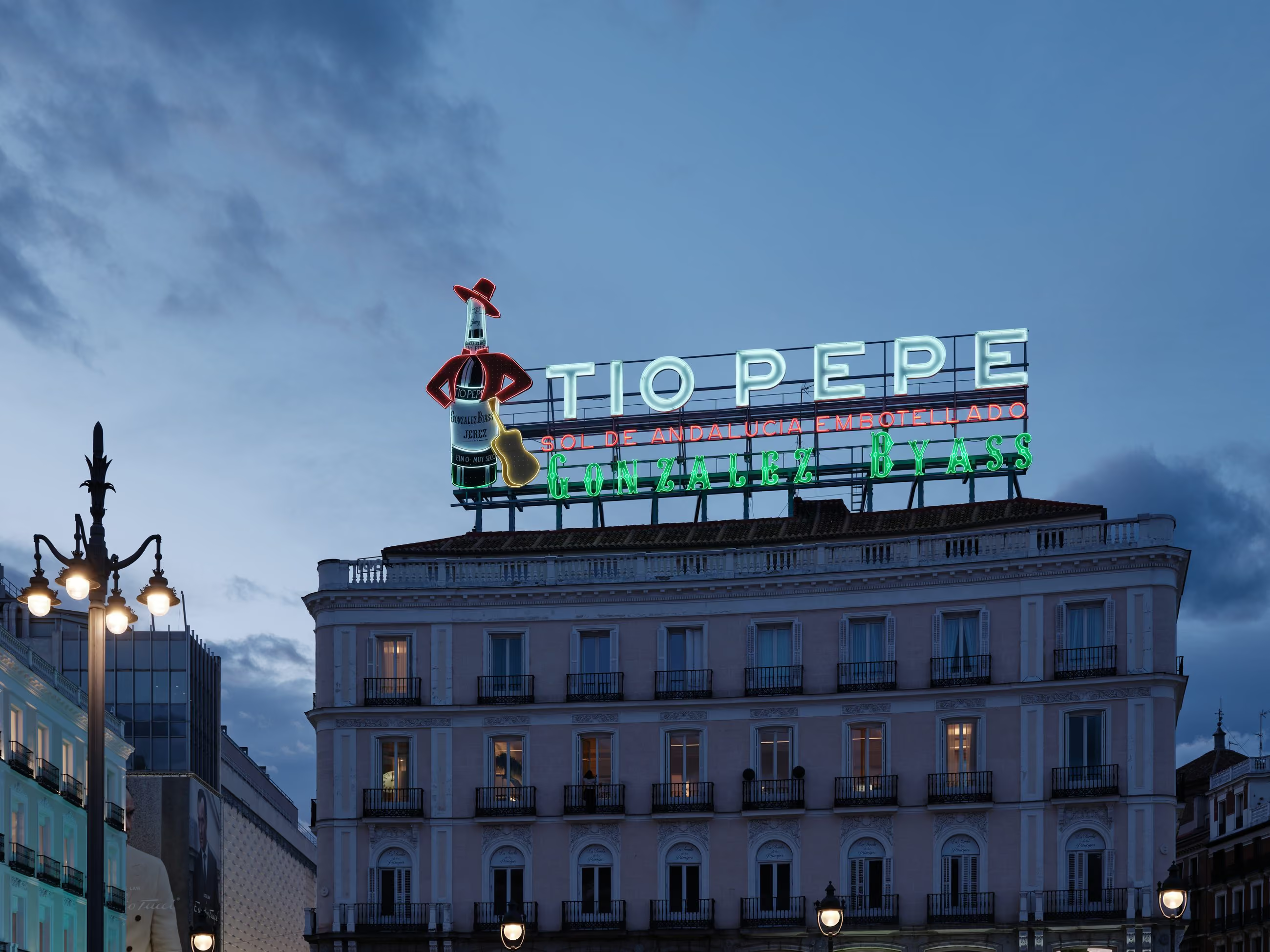
High atop number 11 on the Puerta del Sol, above the building that today houses La Fonda de los Príncipes, stands the Tío Pepe sign.
The bottle dressed in a red jacket, hat and guitar is one of the most recognizable elements of the square. Yet it was not always on that building.
For more than half a century it crowned the former Hotel de París, above what is now the Apple Store. In 2011 it was removed to allow the building’s renovation and, three years later, it returned to Sol from a new rooftop.
The sign had crossed the square.
A bottle turned into a character
Tío Pepe is a brand of fino sherry created by the Jerez winery González Byass. In 1935, to mark the company’s centenary, the advertising man Luis Pérez Solero turned the bottle into a character.
He gave it a short red jacket, a Cordoban hat and a guitar. He also created the slogan that would come to accompany the image:
Sol de Andalucía embotellado — Andalusian sunshine in a bottle.
The design was simple and easy to recognize. The bottle ceased to be merely a container and became a figure with a personality of its own, tied to Jerez and to the popular image of Andalusia.
The year 1935 is often cited as the origin of the sign at Sol, but it is worth distinguishing between the creation of the character and the installation of the illuminated sign we know today.
On November 25, 1935, a license was requested to place the first González Byass sign. That advertisement was installed in 1936 above number 1 on the Puerta del Sol and displayed the winery’s name, the words “Vinos Jerez Coñac” and the image of a sherry taster.
The great illuminated sign with the humanized bottle, the name Tío Pepe and the slogan “Sol de Andalucía embotellado” was installed in 1958, after a license was obtained to modify the earlier advertisement.
Atop the Hotel de París
The sign’s first location was the rooftop of the Hotel de París, at the corner of the square between Calle de Alcalá and the Carrera de San Jerónimo.
The hotel had opened in 1864 and was one of the grand establishments built during the renovation of Sol. By the time the sign appeared, the building had been welcoming travelers for nearly a century.
The position was exceptional. The advertisement could be seen from almost anywhere in the square and appeared behind the crowd during demonstrations, celebrations and the New Year’s Eve chimes.
For decades it coexisted with many other signs. The facades and rooftops of Sol were covered with advertisements for drinks, banks, insurance companies, shops and cameras. At night, the bulbs and neon tubes could hide part of the architecture.
Tío Pepe was just one more — but it remained when almost all the others disappeared.
From advertisement to symbol
Municipal regulations began to restrict outdoor advertising, especially on protected buildings. The aim was to reclaim the facades and prevent large commercial structures from dominating the historic landscape.
The Tío Pepe sign received exceptional treatment. In 2009, González Byass applied for its legalization and obtained authorization to keep it on account of its value as a historic advertising sign. The City Council thus acknowledged that the advertisement had ceased to be merely a commercial piece and had become part of the image of Madrid.
Its popularity is explained by how long it stood over Sol. It appeared in family photographs, postcards, films, news broadcasts and New Year’s Eve transmissions.
Several generations grew up seeing the bottle above the Hotel de París. For many Madrilenians, removing it was tantamount to erasing one of the square’s monuments, even if its origin was commercial.
The removal
The Hotel de París closed in 2006. The building was to be renovated and turned into an Apple Store, so the sign had to be dismantled.
The illuminated sign was taken down in April 2011. Its pieces were carried off to be restored and to lighten a structure that had to be adapted to a new roof.
In June 2012, the owners of the former Hotel de París announced that the sign would not return to its historic location. The search then began for another building within the Puerta del Sol.
The main condition was that Tío Pepe remain on the square. After decades as part of its skyline, moving it to another part of Madrid would have broken the bond that had made it a symbol.
The move to number 11
The new location chosen was the rooftop of number 11 on the Puerta del Sol, above the building of the former Fonda de los Príncipes.
The decision was announced in December 2012, and the City Council granted the building permit in November 2013. The structure had to be adapted to a different roof and was modified to reduce its weight.
Installation began in the early hours of April 21, 2014. The bottle, the letters and the metal supports were hoisted up and assembled piece by piece.
On May 8, 2014, after three years of absence, Tío Pepe lit up again in Sol.
The sign no longer stood at the eastern end. It had moved to the centre of the northern arc, between Calle Preciados and Calle del Carmen, facing the Real Casa de Correos.
From there it once again appeared during the New Year’s Eve chimes.
From the Hotel de París to La Fonda de los Príncipes
The move created an unexpected connection between two of the grand hotels born during the renovation of Sol.
The Hotel de París opened in 1864. La Fonda de los Príncipes had done so three years earlier, on October 1, 1861.
Throughout the 19th century they competed for the travelers arriving in Madrid. Both offered rooms with views, lounges, a dining room and services aimed at an international clientele.
The Hotel de París closed and its building became an Apple Store. La Fonda changed names several times, ended up operating as the Hostal Americano and closed in 2020. After a complete renovation, it recovered its original name and reopened in 2026.
The sign that for decades identified the Hotel de París now stands above La Fonda de los Príncipes.
The last great illuminated sign of Sol
Today’s Puerta del Sol has far fewer advertisements than the 20th-century square. Most of the great signs disappeared with the closure of shops, the renovation of buildings and the new advertising regulations.
Tío Pepe survived because Madrid stopped seeing it as just another advertisement.
Its design belongs to a commercial brand, but its history is bound to the square. It has witnessed demonstrations, renovations, celebrations and decades of New Year’s Eve chimes from two different rooftops.
Since 2014, the bottle has shone above number 11. Below stands the historic building of La Fonda de los Príncipes and, across the way, the clock of the Casa de Correos.
Tío Pepe no longer occupies its original spot.
It still holds its place in the square.
Frequently asked questions
Where is the Tío Pepe sign?
How long has the Tío Pepe sign existed?
Why was the Tío Pepe sign moved?
Sources
Keep exploring
History of the Puerta del Sol
From medieval gate to the symbolic centre of Madrid: the history of the Puerta del Sol, its great 19th-century renovation, the arrival of transport, its monuments and its role as a gathering place.
LeerThe great renovation that created the Puerta del Sol
The 1857-1862 renovation that created today's Puerta del Sol: the competing designs, the demolitions, Lucio del Valle's arc of buildings and the cost of the new square.
LeerKilometre Zero
The Kilometre Zero plaque, in front of the Real Casa de Correos in the Puerta del Sol, marks the historic origin of Spain's six radial highways. Its history since 1856 and today's compass rose.
LeerWhy It Is Called Puerta del Sol
Puerta del Sol was once a gateway into medieval Madrid, decorated with a sun. Discover how that vanished gate gave the square its name.
Leer